In search of the best AI coding assistant? An AI coding assistant is software that uses machine learning to help you get more done — it turns a rough idea into a polished result in seconds. When choosing one, weigh output quality, pricing, export formats, and how well it fits the tools you already use. Whether you are a beginner or a pro, the right AI coding assistant slots into your workflow and pays for itself fast. Below we compare features, pricing, and real output so you can choose with confidence.
Pharmacy automation
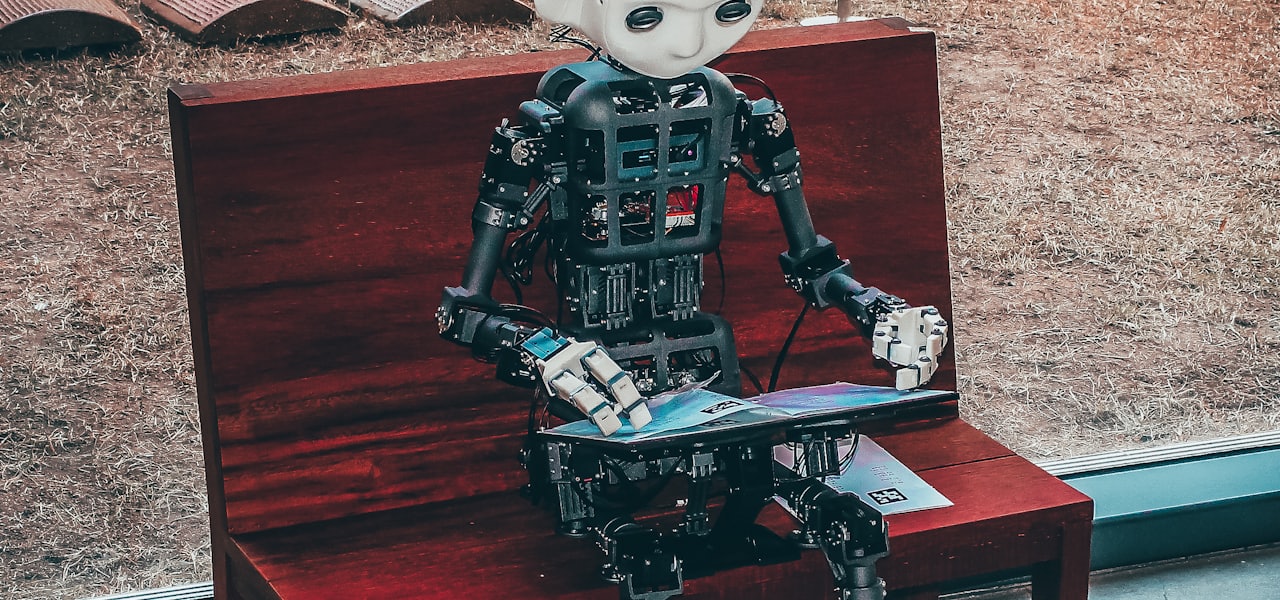
Pharmacy automation involves the mechanical processes of handling and distributing medications. Any pharmacy task may be involved, including counting small objects (e.g., tablets, capsules); measuring and mixing powders and liquids for compounding; tracking and updating customer information in databases (e.g., personally identifiable information (PII), medical history, drug interaction risk detection); and inventory management. This article focuses on the changes that have taken place in the local, or community pharmacy since the 1960s. == History == Dispensing medications in a community pharmacy before the 1970s was a time-consuming operation. The pharmacist dispensed prescriptions in tablet or capsule form with a simple tray and spatula. Many new medications were developed by pharmaceutical manufacturers at an ever-increasing pace, and medications prices were rising steeply. A typical community pharmacist was working longer hours and often forced to hire staff to handle increased workloads which resulted in less time to focus on safety issues. These additional factors led to use of a machine to count medications. The original electronic portable digital tablet counting technology was invented in Manchester, England between 1967 and 1970 by the brothers John and Frank Kirby. I had the original idea of how the machine would work and it was my patent, but it was a joint effort getting it to work in a saleable form. It was 3 years of very hard work. I had originally studied heavy electrical engineering before changing over to Medical School and qualifying as a Medical Doctor in 1968. In fact I was Senior House (Casualty) Officer (A&E or ER) in 1970 at North Manchester General Hospital when I filed the patent. I must have been the only hospital doctor in Britain with an oscilloscope, a soldering iron and a drawing board in his room in the Doctors' Residence. The housekeepers were bemused by all the wires. Frank originally trained as a Banker but quit to take a job with a local electronics firm during the development. He died in 1987, a terrible loss. [Extract from personal communication received in March 2010 from John Kirby.] Frank and John Kirby and their associate Rodney Lester were pioneers in pharmacy automation and small-object counting technology. In 1967, the Kirbys invented a portable digital tablet counter to count tablets and capsules. With Lester they formed a limited company. In 1970, their invention was patented and put into production in Oldham, England. The tablet counter aided the pharmacy industry with time-consuming manual counting of drug prescriptions. A counting machine consistently counted medications accurately and quickly. This aspect of pharmacy automation was quickly adopted, and innovations emerged every decade to aid the pharmacy industry to deliver medications quickly, safely, and economically. Modern pharmacies have many new options to improve their workflow by using the new technology, and can choose intelligently from the many options available. === Chronology === On 1 January 1971 commercial production of the first portable digital tablet counters in the World began. John Kirby had filed U.K. Patent number GB1358378(A) on 8 September 1970 and U.S. patent number 3789194 on 9 August 1971. These early electronic counters were designed to help pharmacies replace the common (but often inaccurate) practice of counting medications by hand. In 1975, the digital technology was exported to America. In early 1980 a dedicated research, development and production facility was built in Oldham, England at a cost of £500,000. Between 1982 and 1983, two separate development facilities had been created. In America, overseen by Rodney Lester; and in England, overseen by the Kirby brothers. In 1987, Frank Kirby died. In 1989, John Kirby moved his UK facility to Devon, England. A simple to operate machine had been developed to accurately and quickly count prescription medications. Technology improvements soon resulted in a more compact model. The price of such equipment in 1980 was around £1,300. This substantial investment in new technology was a major financial consideration, but the pharmacy community considered the use of a counting machine as a superior method compared to hand-counting medications. These early devices became known as tablet counter, capsule counter, pill counter, or drug counter. The new counting technology replaced manual methods in many industries such as, vitamin and diet supplement manufacturing. Technicians needed a small, affordable device to count and bottle medications. In England and America, the 1980s and 1990s saw new the development of high-speed machines for counting and bottle filling, Like their pharmacy-based counterparts, these industrial units were designed to be fast and simple to operate, yet remain small and cost effective. In America, in the late 1990s/early 2000s a new type of tablet counter appeared. It was simple to use, compact, inexpensive, and had good counting accuracy. At the turn of the millennium technical advances allowed the design of counters with a software verification system. With an onboard computer, displaying photo images of medications to assist the pharmacist or pharmacy technician to verify that the correct medication was being dispensed. In addition, a database for storing all prescriptions that were counted on the device. Between September 2005 and May 2007, American Capital made a major financial investment in Kirby Lester, which then relocated to a larger facility to expand its research and development capabilities. This move added extra space for product research and development facility (R&D). It allowed the opportunity to develop new advanced technology products that met the pharmacy's needs for simple, accurate, and cost-effective ways to dispense prescriptions safely. Pictured here is an early American type of integrated counter and packaging device. This machine was a third generation step in the evolution of pharmacy automated devices. Later models held pre-counted containers of commonly-prescribed medications. == Global variations == In the EU member states legislation was introduced in 1998 which had a major effect on UK Pharmacy operations. It effectively prohibited the use of tablet counters for counting and dispensing bulk packaged tablets. Both usage and sales of the machines in the UK declined rapidly as a result of the introduction of blister packaging for medicines. == Current state of the industry == A tablet counter has become a standard in more than 30,000 sites in 35 countries (as of 2010) (including many non-pharmacy sites, such as manufacturing facilities that use a counting machine as a check for small items). During the 1990s through 2012, numerous new pharmacy automation products came to market. During this timeframe, counting technologies, robotics, workflow management software, and interactive voice recognition (IVR) systems for retail (both chain and independent), outpatient, government, and closed-door pharmacies (mail order and central fill) were all introduced. Additionally, the concept of scalability - of migrating from an entry-level product to the next level of automation (e.g., counting technology to robotics) - was introduced and subsequently launched a new product line in 1997. Pharmacists everywhere are making the switch to automation for its increased speed, greater accuracy, and better security. As the industry evolves and customer expectations grow, automation is becoming less of a luxury and more of a necessity. Especially for independent pharmacies, automation is now a means of keeping up with the competition of large chain pharmacies. == Technological changes and design improvements == Constant developments in technology make the dispensing of prescription medications safer, more accurate and more efficient. In America, in 2008, "next-generation" counting and verification systems were introduced. Based on the counting technology employed in preceding models, later machines included the ability to help the pharmacy operate more effectively. Equipped with a new computer interface to a pharmacy management system, with workflow and inventory software. It also included "checks and balances" to ensure the technician and pharmacist were dispensing the correct medication for each patient. This is something that is important to keep reported correctly when dealing with controlled substances like narcotics. This was a step forward to verify all 100% of prescriptions that were dispensed by pharmacy staff. In America, in 2009, further advanced counters were designed that included the ability to dispense hands-free – a feature that many operators had desired. This allowed pharmacies to automate their most commonly dispensed medications via calibrated cassettes. Thirty of a pharmacy's common medications would now be dispensed automatically. Another new model doubled that throughput via an enclosed robotic mechanism. Robo
Peñabot
Peñabot is the nickname for automated social media accounts allegedly used by the Mexican government of Enrique Peña Nieto and the PRI political party to keep unfavorable news from reaching the Mexican public. Peñabot accusations are related to the broader issue of fake news in the 21st century. == History of disinformation in Mexican politics == The PRI political party has been reported to use fake news since before Peña Nieto. The main tactic originally was to spread such propaganda through open radio and television networks. Such tactic was effective in Mexico, because newspaper readership is low and cable TV is largely limited to the middle classes; consequently, the country's two major television networks – Televisa and TV Azteca – exert a significant influence in national politics. Televisa itself, not only owns around two-thirds of the programming on Mexico's TV channels, making it not only Mexico's largest television network, but also is the largest media network in the Spanish-speaking world. == Peñabots == Analysts have given the name Peñabots to a suspected network of automated accounts on social media used by the Mexican government to spread pro-government propaganda and to marginalize dissenting opinions in social media. The bots were first noticed in the 2012 elections when they were used to disseminate opinions in support of Enrique Peña Nieto on social networks such as Twitter and Facebook. According to Aristegui Noticias, their usage went against articles 6 and 134 of the Mexican Constitution. Those used by Peña Nieto's government cost an estimated 80 million pesos monthly, which news outlets argued only helped the government spread fake support towards the president, but did not have a benefit towards Mexican people (with whom EPN was highly unpopular). Facebook held approximately 640,321 Peñabots, while Twitter had less. As of July 2017, Oxford Internet Institute's Computational Propaganda Research Project claimed many western democracies, Mexico included, perform social media manipulation, thus saying the manipulation comes directly from the Mexican government itself. During Peña Nieto's subsequent presidency, analysts noted that Peñabots were used to overpower trending topics that critiqued government, to flood trending government critical hashtags with spam, to create fake trends by pushing alternative hashtags, and to push smear campaigns and threats against government-critical activists and journalists. Peñabots were distinguished as their pattern of activity was distinct from that of ordinary interaction on social networks. === Meadebots === On Twitter it was reported that about 94% of the followers of 2018 presidential candidate from the PRI Jose Antonio Meade were bots. When Antonio Meade presented himself as a candidate for the 2018 presidential election, his social media accounts such as "@MovimientoMEADE" (created by the PRI's official account @PRI_Nacional), obtained a huge quantity of followers in a short span of time. Some users noticed and brought it to attention, and after investigation it was reported 94% of such followers were bots (702,000 out of 747,000), and the account was eliminated from Twitter after 20 hours. The fake accounts used the hashtags #YoConMeade and #Meade18. It was further revealed was that Meade's official account on Twitter, @JoseAMeadeK had 25% bots (216,000 fake followers out of the 981,000). == Manipulation of news media in Mexico, through television == The Mexican government of Peña Nieto has been accused of using various means to keep unfavorable news from reaching the Mexican people. Many Mexicans have protested this practice as it clearly goes against the freedom of speech. The PRI has been reported to use fake news since before Peña Nieto. The main tactic has been to spread such propaganda through radio and television. This tactic is perceived as effective in Mexico, because newspaper readership is low and research on the Internet and cable TV is largely limited to the middle classes; consequently, the country's two major television networks – Televisa and TV Azteca – exert a significant influence in national politics. Televisa itself, owns around two-thirds of the programming on Mexico's TV channels, making it not only Mexico's largest television network, but also is the largest media network in the Spanish-speaking world. In June 2012, before the 2012 Mexican presidential elections, the British newspaper The Guardian published a series of allegations claiming Televisa, sold favorable coverage to top politicians in its news and entertainment shows, this scandal became known as the Televisa controversy. The documents published by 'The Guardian alleged that a secretive circle within Televisa manipulated news coverage to favor PRI presidential candidate Enrique Peña Nieto, who was poised as favorite to win. Televisa's secret circle supposedly commissioned videos to promote Peña Nieto and lash out his political rivals in 2009. The Guardian documents suggest that Televisa's secret team distributed such videos through e-mail, posting them posted them on Facebook and YouTube, some can still be seen there. Another document was a PowerPoint presentation, with a slide explicitly aimed at rival leftist candidate of the Party of the Democratic Revolution (PRD), Andrés Manuel López Obrador. Supposedly given to The Guardian by a Televisa employee. The document's authenticity was never possible to confirm– however dates, names, and events largely coincide. Televisa refused to talk the documents, and denied a relationship with the PRI or its presidential candidate, saying that they had provided equal media coverage to all parties. Televisa published an article supposedly showing discrepancies in The Guardian documents and denying accusations. Mexican citizens complained about the perceived favoritism towards Enrique Peña Nieto and the PRI, protesting through the Yo Soy 132 movement which Televisa covered in detail. However, Televisa's news media coverage is perceived to have been biased, by using a media coverage tactic Mexican citizens call cortinas de humo (smoke screens). These introduce a news scandal giving extensive coverage to distract citizens from a potential conflict-of-interest or controversy that could damage the image of the politician favored by the network. An example of a perceived smoke screen would be the news media coverage of "Caso Michoacán" and "Caso Paolette" distracting all the attention from the parallel "Yo soy 132" movement. A few years later, on the day of September 11, 2016; factual evidence of Televisa's performing media manipulation emerged, when a Televisa news anchor while live-on air reading a teleprompter, mistakenly read out loud that "try that Jaime "Ël Bronco" Rodríguez Calderón (Nuevo Leon's governor) is mentioned as little as possible". Newspaper El Universal caught it on video and published it social media. Televisa didn't mention the story and declined to comment. Lack of news coverage concerning Nuevo León's Governor Jaime Rodriguez, is perceived due to him being the first elected governor to not be part of any political party (Independent Governor), and because unlike the governors from the PRI preceding him, the independent governor "El Bronco" doesn't spend money on publicity at all, preferring to communicate all news by using social media such as Twitter and Facebook. While the incident may have proven Televisa's bias, there wasn't anything to incriminate the PRI political party or Enrique Peña Nieto, though it did further suspicion of Televisa manipulating news media. In contrast, a December 2017 article of The New York Times, reported Enrique Peña Nieto spending about 2000 million dollars on publicity, during his first 5 years as president, the largest publicity budget ever spent by a Mexican President. Additionally, 68 percent of news journalists admitted to not believe to have enough freedom of speech, and award-winning news reporter Carmen Aristegui was controversially fired shortly after revealing the Mexican White House scandals. == Violence and spying towards news journalists and civil rights activists == Far for only being receiving accusations of spreading fake news, the Mexican government of EPN (Enrique Peña Nieto) has also been accused of violence towards news journalists, and of spying on them, and also towards civil right leaders and their families. During his tenure as president, Peña Nieto has been accused of failing to protect news journalists, whose deaths are speculated to be politically triggered, by politicians attempting to prevent them from covering political scandals. The New York Times published a news report on the matter titled, "In Mexico it's easy to kill a journalist", on it mentioning how during EPN's government, Mexico became one of the worst countries on which to be a journalist. The assassination of journalist Javier Valdez on May 23, 2017, received national coverage, with multiple news journalists
IWARP
iWARP is a computer networking protocol that implements remote direct memory access (RDMA) for efficient data transfer over Internet Protocol networks. Contrary to some accounts, iWARP is not an acronym. Because iWARP is layered on Internet Engineering Task Force (IETF)-standard congestion-aware protocols such as Transmission Control Protocol (TCP) and Stream Control Transmission Protocol (SCTP), it makes few requirements on the network, and can be successfully deployed in a broad range of environments. == History == In 2007, the IETF published five Request for Comments (RFCs) that define iWARP: RFC 5040 A Remote Direct Memory Access Protocol Specification is layered over Direct Data Placement Protocol (DDP). It defines how RDMA Send, Read, and Write operations are encoded using DDP into headers on the network. RFC 5041 Direct Data Placement over Reliable Transports is layered over MPA/TCP or SCTP. It defines how received data can be directly placed into an upper layer protocols receive buffer without intermediate buffers. RFC 5042 Direct Data Placement Protocol (DDP) / Remote Direct Memory Access Protocol (RDMAP) Security analyzes security issues related to iWARP DDP and RDMAP protocol layers. RFC 5043 Stream Control Transmission Protocol (SCTP) Direct Data Placement (DDP) Adaptation defines an adaptation layer that enables DDP over SCTP. RFC 5044 Marker PDU Aligned Framing for TCP Specification defines an adaptation layer that enables preservation of DDP-level protocol record boundaries layered over the TCP reliable connected byte stream. These RFCs are based on the RDMA Consortium's specifications for RDMA over TCP. The RDMA Consortium's specifications are influenced by earlier RDMA standards, including Virtual Interface Architecture (VIA) and InfiniBand (IB). Since 2007, the IETF has published three additional RFCs that maintain and extend iWARP: RFC 6580 IANA Registries for the Remote Direct Data Placement (RDDP) Protocols published in 2012 defines IANA registries for Remote Direct Data Placement (RDDP) error codes, operation codes, and function codes. RFC 6581 Enhanced Remote Direct Memory Access (RDMA) Connection Establishment published in 2011 fixes shortcomings with iWARP connection setup. RFC 7306 Remote Direct Memory Access (RDMA) Protocol Extensions published in 2014 extends RFC 5040 with atomic operations and RDMA Write with Immediate Data. == Protocol == The main component in the iWARP protocol is the Direct Data Placement Protocol (DDP), which permits the actual zero-copy transmission. DDP itself does not perform the transmission; the underlying protocol (TCP or SCTP) does. However, TCP does not respect message boundaries; it sends data as a sequence of bytes without regard to protocol data units (PDU). In this regard, DDP itself may be better suited for SCTP, and indeed the IETF proposed a standard RDMA over SCTP. To run DDP over TCP requires a tweak known as marker PDU aligned (MPA) framing to guarantee boundaries of messages. Furthermore, DDP is not intended to be accessed directly. Instead, a separate RDMA protocol (RDMAP) provides the services to read and write data. Therefore, the entire RDMA over TCP specification is really RDMAP over DDP over either MPA/TCP or SCTP. All of these protocols can be implemented in hardware. Unlike IB, iWARP only has reliable connected communication, as this is the only service that TCP and SCTP provide. The iWARP specification omits other features of IB, such as Send with Immediate Data operations. With RFC 7306, the IETF is working to reduce these omissions. == Implementation == Because a kernel implementation of the TCP stack can be seen as a bottleneck, the protocol is typically implemented in hardware RDMA network interface controllers (rNICs). As simple data losses are rare in tightly coupled network environments, the error-correction mechanisms of TCP may be performed by software while the more frequently performed communications are handled strictly by logic embedded on the rNIC. Similarly, connections are often established entirely by software and then handed off to the hardware. Furthermore, the handling of iWARP specific protocol details is typically isolated from the TCP implementation, allowing rNICs to be used for both as RDMA offload and TCP offload (in support of traditional sockets based TCP/IP applications). The portion of the hardware implementation used for implementing the TCP protocol is known as the TCP Offload Engine (TOE). TOE itself does not prevent copying on the reception side, and must be combined with RDMA hardware for zero-copy results. The RDMA / TCP specification is a set of different wire protocols intended to be implemented in hardware (though it seems feasible to emulate it in software for compatibility but without the performance benefits). == Interfaces == iWARP is a protocol, not an implementation, but defines protocol behavior in terms of the operations that are legal for the protocol, known as Verbs. As such, iWARP does not have any single standard programming interface. However, programming interfaces tend to very closely correspond to the Verbs. Several programmatic interfaces have been proposed, including OpenFabrics Verbs, Network Direct, uDAPL, kDAPL, IT-API, and RNICPI. Implementations of some of these interfaces are available for different platforms, including Windows and Linux. == Services available == Networking services implemented over iWARP include those offered in the OpenFabrics Enterprise Distribution (OFED) by the OpenFabrics Alliance for Linux operating systems, and by Microsoft Windows via Network Direct. NVMe over Fabrics (NVMEoF) iSCSI Extensions for RDMA (iSER) Server Message Block Direct (SMB Direct) Sockets Direct Protocol (SDP) SCSI RDMA Protocol (SRP) Network File System over RDMA (NFS over RDMA) GPUDirect
Tropical cryptography
In tropical analysis, tropical cryptography refers to the study of a class of cryptographic protocols built upon tropical algebras. In many cases, tropical cryptographic schemes have arisen from adapting classical (non-tropical) schemes to instead rely on tropical algebras. The case for the use of tropical algebras in cryptography rests on at least two key features of tropical mathematics: in the tropical world, there is no classical multiplication (a computationally expensive operation), and the problem of solving systems of tropical polynomial equations has been shown to be NP-hard. == Basic Definitions == The key mathematical object at the heart of tropical cryptography is the tropical semiring ( R ∪ { ∞ } , ⊕ , ⊗ ) {\displaystyle (\mathbb {R} \cup \{\infty \},\oplus ,\otimes )} (also known as the min-plus algebra), or a generalization thereof. The operations are defined as follows for x , y ∈ R ∪ { ∞ } {\displaystyle x,y\in \mathbb {R} \cup \{\infty \}} : x ⊕ y = min { x , y } {\displaystyle x\oplus y=\min\{x,y\}} x ⊗ y = x + y {\displaystyle x\otimes y=x+y} It is easily verified that with ∞ {\displaystyle \infty } as the additive identity, these binary operations on R ∪ { ∞ } {\displaystyle \mathbb {R} \cup \{\infty \}} form a semiring.
Environmental impact of AI
The environmental impact of the design, training, deployment and use of artificial intelligence includes the greenhouse gas emissions from generating electricity for data centres and computing hardware, operational and upstream water use, and material impacts from hardware manufacturing, mining and electronic waste. Estimating AI's environmental effects can be difficult because results depend on how impacts are measured, including whether accounting includes only model computation or also data-centre overhead, idle capacity, hardware manufacture, and local electricity supply. As these issues have received greater attention, governments and regulators have increasingly considered data-centre reporting requirements, energy-efficiency standards, and broader transparency measures for AI-related resource use. == Carbon footprint and energy use == AI-related energy use arises at multiple stages, including model training, fine-tuning, inference, storage, networking, and supporting infrastructure such as cooling and power conversion. === Individual level === Published estimates of energy use per AI request vary widely across models, tasks and measurement methods. A benchmark study presented at the 2024 ACM Conference on Fairness, Accountability, and Transparency found substantial differences between task types, with lower energy use for some text tasks and much higher energy use for image generation in the study's test conditions. In that benchmark, simple classification tasks consumed about 0.002–0.007 Wh per prompt on average (about 9% of a smartphone charge for 1,000 prompts), while text generation and text summarisation each used about 0.05 Wh per prompt; image generation averaged 2.91 Wh per prompt, and the least efficient image model in the study used 11.49 Wh per image (roughly equivalent to half a smartphone charge). First-party measurements in production environments have also been published. A 2025 Google study on Gemini assistant serving reported median per-prompt energy, emissions, and water-use estimates under the authors' accounting framework, while noting that different system boundaries can produce substantially different results. The study reported a median text-prompt estimate of about 0.24 Wh, which is roughly as much energy as watching nine seconds of television. The study also stated that software and infrastructure improvements reduced energy use by a factor of 33 and carbon emissions by a factor of 44 for a typical prompt over one year within the authors' framework. Researchers at the University of Michigan measured the energy consumption of various Meta Llama 3.1 models released in 2024 and found that smaller language models (8 billion parameters) use about 114 joules (0.03167 Wh) per response, while larger models (405 billion parameters) require up to 6,700 joules (1.861 Wh) per response. This corresponds to the energy needed to run a microwave oven for roughly one-tenth of a second and eight seconds, respectively. Comparisons between AI systems and human labour for specific tasks have produced mixed results and remain sensitive to assumptions about output quality, workload and system boundaries. A 2024 study in Scientific Reports reported 130 to 2900 times lower estimated carbon emissions for selected AI systems than for human writers and illustrators under its assumptions. A later Scientific Reports paper reported a counterexample for programming tasks under its assumptions, finding 5 to 19 times higher estimated emissions for the evaluated AI system than for human programmers on the benchmark used in that study. === System level === ==== Energy use and efficiency ==== AI electricity intensity depends not only on model architecture but also on hardware and facility efficiency. Data-centre operators commonly report Power usage effectiveness (PUE), which measures the ratio of total facility energy to IT equipment energy; a lower PUE indicates less overhead energy for cooling and other supporting infrastructure. Operators may also publish metrics and case studies on hardware efficiency, cooling systems and power sourcing. In its 2024 environmental report, Google stated that its 2023 total greenhouse gas emissions increased 13% year over year, primarily because of increased data-centre energy consumption and supply-chain emissions, while also reporting lower PUE than industry averages for its own facilities. The International Energy Agency has also reported that data centres remain a relatively small share of global electricity use overall, but that their local effects can be much more pronounced because demand is geographically concentrated. ==== Carbon footprint ==== At system level, AI contributes to rising electricity demand in data centres and related infrastructure. The International Energy Agency estimated that data centres used about 415 TWh of electricity in 2024, or around 1.5% of global electricity consumption, and projected that data-centre electricity use could rise to about 945 TWh by 2030, with AI identified as the main driver of that growth alongside other digital services. The carbon footprint of AI systems depends strongly on electricity sources, hardware efficiency, utilisation rates, and what stages are included in the accounting. Training large models can require substantial electricity, while total lifecycle impacts also depend on deployment scale and the amount of inference performed after training. Early analyses of frontier-model development reported rapid historical growth in training compute for selected systems, although later trends have depended on changes in model design, hardware and efficiency gains. Accounting methods that include upstream or embodied impacts, such as hardware manufacture and facilities construction, can materially affect estimates of AI-related emissions. === Decisions and strategies by individual companies === Large technology companies have reported that the expansion of AI and cloud infrastructure affects their sustainability targets, electricity demand, and resource use. Google, for example, attributed part of its emissions growth in 2023 to increased data-centre energy consumption and supply-chain emissions in its 2024 environmental report. Cloud and AI companies have also announced measures intended to reduce environmental impacts, including investment in more efficient hardware, low-carbon electricity procurement, alternative cooling systems, and water stewardship programmes. The extent, comparability, and third-party verification of such disclosures vary between firms and jurisdictions. == Water usage == Data centres can use water directly for cooling and indirectly through the water used in electricity generation, depending on the local energy mix. Public reporting on data-centre water use has often been inconsistent, making comparisons between operators and regions difficult. To standardise operational reporting, The Green Grid proposed the metric water usage effectiveness (WUE), defined as annual site water use divided by IT equipment energy use. WUE does not by itself measure local water stress, source sustainability, or all upstream water impacts. Studies of AI water use also distinguish between water withdrawal and water consumption. Research on AI-specific water use has argued that the water footprint of AI systems can be difficult to observe and may vary substantially by location, cooling design, and electricity source. A 2025 Communications of the ACM article summarised methods for estimating AI water footprints and emphasised the distinction between water withdrawal and water consumption. Li and colleagues estimated that global AI water withdrawal could reach 4.2–6.6 billion cubic metres in 2027 under the scenarios examined in their article. Using GPT-3, released by OpenAI in 2020, as an example, they estimated that training the model in Microsoft's U.S. data centres could consume about 700,000 litres of onsite water and about 5.4 million litres in total when offsite electricity-related water use was included; they also estimated that 10–50 medium-length GPT-3 responses could consume about 500 mL of water, depending on when and where the model was deployed. Published prompt-level estimates have also varied by system and accounting framework: the 2025 Google study on Gemini assistant serving reported a median text-prompt estimate of about 0.26 mL under its framework. Location can materially affect the significance of data-centre water use. Research on U.S. data centres found that one-fifth of servers' direct water footprint came from moderately to highly water-stressed watersheds, while nearly half of servers were fully or partially powered by plants located in water-stressed regions. A 2025 Reuters report, citing data from Verisk Maplecroft and NatureFinance, said that an average mid-sized data centre uses about 1.4 million litres of water per day for cooling and that Phoenix would experience a 32% increase in annual water stress if currently pl
Kurzsignale
The Short Signal Code, also known as the Short Signal Book (German: Kurzsignalbuch), was a short code system used by the Kriegsmarine (German Navy) during World War II to minimize the transmission duration of messages. == Description == The transmission of radio messages had the potential risks of revealing the submarine's presence and direction; if decoded the content was also revealed. Submarines need to provide information, mostly in standard form (position of convoy to attack and of submarine, weather information), to their bases. Initially Morse code transmissions could be used. To inhibit detection, the duration of messages needed to be minimised; for this, Kurzsignale short-coding was used. To prevent interception, messages needed to be encrypted by the Enigma machine. To shorten transmission even further, the message could be sent by a fast machine instead of a human radio operator. For example, the Kurier system – not implemented in time – decreased the time to send a Morse dot from around 50 milliseconds for a human to 1 millisecond. == Short Signal book == The Kurzsignale code was intended to shorten transmission time to below the time required to get a directional fix. It was not primarily intended to hide signal contents; protection was intended to be achieved by encoding with the Enigma machine. A copy of the Kurzsignale code book was captured from German submarine U-110 on 9 May 1941. In August 1941, Dönitz began addressing U-boats by the names of their commanders, instead of boat numbers. The method of defining U-boat meeting points in the Short Signal Book was regarded as compromised, so a method was defined by B-Dienst cryptanalysts to disguise their positions on the Kriegsmarine German Naval Grid System (German:Gradnetzmeldeverfahren) was introduced and used until the end of the war == Radio direction finding == Aware of the danger presented by radio direction finding (RDF), the Kriegsmarine developed various systems to speed up broadcast. The Kurzsignale code system condensed messages into short codes consisting of short sequences for common terms such as "convoy location" so that additional descriptions would not be needed in the message. The resulting Kurzsignal was then encoded with the Enigma machine and subsequently transmitted as rapidly as possible, typically taking about 20 seconds. Typical length of an information or weather signal was about 25 characters. Conventional RDF needed about a minute to fix the bearing of a radio signal, and the Kurzsignale protected against this. However, the huff-duff system which was in use by the Allies could cope with these short transmissions. The fully automated burst transmission Kurier system, in testing from August 1944, could send a Kurzsignal in not more than 460 milliseconds; this was short enough to prevent location even by huff-duff and, if deployed, would have been a serious setback for Allied anti-submarine and code-breaking activities. By late 1944 the Kurier program was a top priority, but the war ended before the system was operational. == Short Weather cipher == A similar coding system was used for weather reports from U-boats, the Wetterkurzschlüssel (Short Weather Cipher). Code books were captured from U-559 on 30 October 1942.